
About Marcelo Castelo
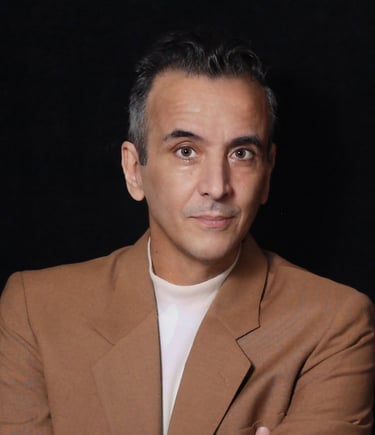
Marcelo Oscar Castelo holds a degree in System Engineering from the Universidad Católica de La Plata, is president of the Instituto Argentino del Tango (IAT) and HC academic of the Academia Nacional del Tango. Although his professional training is linked to the technological field, from an early age he has developed a sustained commitment to historical research, especially with regard to Argentine and Latin American history.
During his university years he began to focus his studies on the social and political processes that shaped national identity, which led him to take a special interest in tango as a complex cultural phenomenon. Over time, he specialized in the historiographic study of Argentine tango, adopting a critical and revisionist approach that seeks to disarticulate the myths built around its origins and evolution. His field of research focuses on the foundational period of the genre, from the late nineteenth century to the 1920s, working from primary sources such as archival documents, period press, migratory records, editorial publications and phonographic records.
Her approach is characterized by a firm will to dismantle crystallized narratives, privileging documented analysis over folklorized or anachronistic versions. In his research he addresses issues such as the symbolic construction of tango in the nationalist discourse, the participation of popular and immigrant sectors in the development of the genre, and the influence of cultural and industrial policies in its aesthetic and social consolidation.
In addition to his facet as a researcher and teacher, for more than two decades Marcelo Castelo has developed an intense activity in the practical field of tango: he was an organizer of milongas in different cities, directed three tango academies, worked as TDJ (musicalizador de milongas), producer of stage shows and editor of the magazine Argentango, a specialized publication that combined dissemination, criticism and reflection on the universe of tango. These experiences have allowed him to articulate an integral vision of tango, combining research with practice, academic analysis with popular knowledge.
Currently, he combines his professional activity in the technological field with an intense dedication to research, teaching and historical dissemination. He is the academic director and professor of the Diploma in Tango History, organized by the Instituto Argentino del Tango, a training proposal that seeks to articulate the historiographic rigor with the accessibility of the divulgative language. In addition, he gives lectures, talks and workshops in various cultural and academic spaces, both in Argentina and abroad, sharing his research with a wide and heterogeneous audience.
His work is aimed at fostering a critical understanding of tango as a social, political and cultural phenomenon, promoting dialogue between history, memory and Latin American identity.